Archive for November, 2008

____________

28 November 2008

Good Looks — Clothes and Shoes — Fonts and Breaks

Grab a copy of something you wrote — something printed. It has your name, or your firm’s name, or both on it. It’s a brief or a memo, a client alert or an article for the Daily Journal or a handbook given to the attendees of a seminar your firm presents. Whatever it is, grab it.  

Barnes & Noble storefront

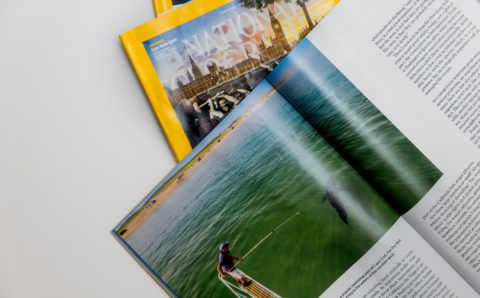
Next, go to a bookstore — a large one, if you can. Browse the sections of that bookstore — the new arrivals, paperback fiction, the magazine section — and compare what was produced in your name to what you find in the bookstore.

Find something in that bookstore that resembles what you brought, as best you can. If it’s a large bookstore — if it’s as large as a Barnes & Noble’s store — then you’ll find a pamphlet about the same size as your brief, or a spiral bound notebook about the same size as the one your firm hands out at seminars — a notebook that contains material written by you.

If what you brought was a client alert — an alert written by you and published by your firm — start browsing world affairs and business magazines. You’ll find a section of a magazine — very likely a special section — that contains a series of pages that have the same consistency of appearance as your firm’s alerts.

(more…)

____________

21 November 2008

Seminar Materials — They Can Make You Look Good, or Not

I recently attended a day-long seminar presented by a large, well known law firm.

This post is about that experience. It’s about seminars, and the materials given to those who attend them. It’s about setting seminar materials in good style.

Logistics

The brochure for the seminar arrived (via e-mail and then USPS) about a month ago, announcing an employment-law seminar being held in San Francisco; is was presented by a nationwide law firm based in Atlanta.

I often write about employment law, or edit seminar materials, so this was work I just couldn’t miss.

I signed up, and the firm sent me a confirmation number. Fine.

Two days before the seminar, the firm sent me a reminder. Fine.

An hour after that, the firm send me another message. It was recalling the reminder.

What?

Ten minutes later, I received what appeared to be the exact same reminder via e-mail. But the attachment — the revised PDF version of the brochure — had a different location for the seminar; but the e-mail message — what most recipients would read — didn’t bother to mention it!

It turned out that quite a few attendees didn’t know the location had changed until they showed up at the wrong one (a few blocks away); many didn’t arrive at the real location until 30 or 40 minutes after the seminar began.

Oops!

First Impressions

I arrived at the seminar, and things looked good. All the attorneys were dressed in excellent to good style. They knew how to greet guests, and they knew how to make them happy: good coffee and excellent pastries!

Later than planned, the event began. The moderator — a senior partner at the firm — got things going. He told us what to expect. As he did, what most caught my attention was his manner: how he spoke and how he used his hands as he spoke and how he used pauses and never said umm or ahh. He certainly knew how to address and engage an audience. And he knew how to dress for success.

The moderator said something about the seminar handbook, and how we could use it to follow the discussion.

Before That

I looked for a place to sit. There! An attractive young lady. I’ll sit next to her.

We introduced ourselves, chatted a bit, and then ran out of stuff to say. We were looking through the handbook, and that gave us more to talk about: the handbook.

I said it didn’t look professional, and she agreed, but wasn’t sure why.

Great! A chance to be helpful.

I mentioned the one typeface that appeared throughout the book. “That’s designed for heads, not text,” I said.

She raised an eyebrow, and she moved her head the way many do when starting to put two and two together.

I talked about how newspapers and magazines and books all used a serif face for body copy, and I told her, “Go to a bookstore and look at the new hard cover books. Try to find one that uses Arial for body copy. Arial’s used for headings and such — that’s what it was designed for; nobody uses it for body copy. Nobody but attorneys and those who work with them, that is.”

She reached into her bag and took out a paperback. She thumbed through it, and it looked just as I said it would — the body copy was set with serifs, and the heads were set sans serif.

“Look at this,” I said, using my pen to direct her attention to the right margin of a page of the handbook. “This is set justified, but there are no hyphens on the right.”

“What does that matter?”

“Look at the space between the words on this line, and the words on this line.”

She noted how they were much narrower on one line than the other.

I told her, “Now look at your paperback. Is it justified? Are there any hyphens along the right margin? Is the space between words consistent? That’s how the pros do it, and they do it for the reader’s sake.”

If you publish a handbook (e.g., hand it out to people at a seminar) you want the copy to be easy to read. You want it to look professional. You don’t want it to look like it was produced by a bunch of sixth graders using an old MS-DOS machine in someone’s basement. Not if your audience includes potential clients.

Later On

The morning went on. Every 45 minutes, the moderator reappeared and introduced an attorney who was going to talk about some topic, but no attorney could speak as well as the moderator.

In the afternoon, there was a tremendous contrast between how one attorney spoke during her presentation — she said “um” about umpteen times — and how the moderator spoke. (I think he said “um” maybe twice the whole day.)

Why, I wondered, didn’t the firm make these attorneys polish their presentation skills before it put them on display?

And why, I wondered, didn’t the firm make this book look more professional? Doesn’t it realize that appearances are important, and that first impressions are critical?

A Pitch

During a break towards the end of the afternoon — right after the worst speaker spoke — I approached the moderator, and I asked how he learned to speak so well.

He told me that he used to make so many presentations that he just got good at it, but I wasn’t buying that. Simply doing something over and over again doesn’t make you good at it. No, you have to study, as well as practice.

I mentioned Toastmasters, and he said he was familiar with it. We agreed it was a great way to cure speakers of saying Ah and Um and Ya know over and over.

Then I took my copy of the book and I asked him this: “Suppose this page was a speaker that said Ah and Um over and over. Would you like to replace that speaker with a speaker who makes as fine a presentation as you?”

He smiled and said nothing.

The End

At the end of the seminar, the audience seemed as if it was pleased with the whole event. Overall, the firm made a favorable impression.

The attractive young gal and I shook hands again; we said how good it was to have met each other, and then she thanked me: not only had she learned about developments in employment law, but she’d learned a thing or two about typesetting, as well.

____________

19 November 2008

Once Again — Why Do Law Firms Need Editors?

Consider the following, the first line in an employment-law seminar handbook published by a large firm that focuses on (you guessed it) employment law:

California Military and Veterans Code section 395.10 permits the spouse of military personnel to take up to 10 days of unpaid leave while the military spouse is on leave from deployment.

The way it’s worded, the military seems to allow polygamy; i.e., many (personnel) are married to (one) The Spouse.

The firm that published this handbook is a publisher, but — like so many firms — it fails do what  publishers do as a matter of course: have an editor review the copy before the book goes to press.

And why does it fail to do what should be done? For most firms, the pat answer is this: “we can’t have editors (esp. those w/o J.D.s) touching what our attorneys write because they might make changes that turn perfectly good copy into bad advice (for which we might become liable).”

____________
What I find so interesting is that the majority of those who attend employment-law seminars aren’t lawyers; they’re HR managers and business owners who are looking to stay clear of employment-related lawsuits. Yet the authors of the materials for these seminars write as if they were writing legal briefs; i.e., they write as if the audience is full of lawyers rather than HR managers and business owners — people who like legalese as much as cats like swimming.

Let’s look at some other copy (same publisher; different employment-law seminar):

CFRA regulations provide that as a condition of an employee’s return from medical leave, the employer may require that the employee obtain a release to “return-to-work” from his/her health care provider stating that he/she is able to resume work only if the employer has a uniformly applied practice or policy of requiring such releases from other employees returning to work after illness, injury or disability.

Now, the HR manager who attends this seminar to learn about CFRA regulations (and how they differ from FMLA regulations) isn’t likely to find this very helpful, and that’s because it’s so convoluted.

What would a skilled and experienced editor (who realizes that the audience for this seminar wants practical information, not obtuse legalese) do with this?

Why, he might simplify it, like so:

Under CFRA, an employer may require a “return-to-work” release from the health care provider of an employee returning from medical leave only if the employer requires such a release for all employees returning from medical leave.

Curious about such things, I ask a partner for the firm why this copy wasn’t rewritten for the benefit an audience full of HR managers and business owners (who aren’t attorneys and who don’t like legalese).

“Oh, that was written by the Fair Employment and Housing Commission and we can’t reword any of it because, if we do, we could be liable for misstating the facts.”

I guess she never read the opening line of the handbook (the one that suggests that everyone in the USAF is married to The Spouse).

____________

17 November 2008

The Law Firm as Publisher

As I’ve said over and over — if you’re a law firm and you maintain a Web site and you publish client alerts and newsletters and such, then you’re also a publisher.

Seems as if Mark Jones, Global Community Editor for Reuters, agrees. See his article “Law firms as media companies.”

____________

17 November 2008

Oh No! Too Much SEO!

I just discovered this interesting post at Law Firm Blogger. It’s about the tendency — strongly advocated by some – to write copy more for search engines than for potential clients.

____________

17 November 2008

Volokh on Academic Legal Writing

Let’s see — you’re a young associate at a Great Big Law Firm and have been for the past few years. You’ve been making some great money, and you’ve been working your butt off (and you’re still in so much debt).

And now you’re worried about job security. You’re wondering, “What happens if I get canned because the economy’s so bad? What in the world will I do then?”

You’re not alone, but you could do something that separates you from so many others in the same situation. You could write a law review article that will be referenced in an opinion published by the U.S. Supreme Court. And when that opinion is published and people see that a justice of the Supreme Court learned a thing or two from your article, you just might get a call from some Great Big Law Firm or a Prestigious Law School — “Would you be interested in working for us?”

You don’t buy it? You don’t think the Court would ever rely on what a young associate wrote? Then consider the Court’s opinion in District of Columbia v. Heller, which refers to this law review article written by Brian L. Frye, a young associate at Sullivan & Cromwell LLP.

“It is difficult to overstate the importance of a written paper for a young lawyer’s career, especially if the piece is published . . . .”
Judge Alex Kozinski

____________
Eugene Volokh teaches constitutional law at UCLA Law School.

He’s written more than 50 law review articles, a number of which have been cited in judicial opinions*.

And he’s the author of Academic Legal Writing: Law Review Articles, Student Notes, Seminar Papers, and Getting on Law Review. As the title suggests, the text is directed at students of law, but its contents are valuable to anyone planning to write a law review article. And that includes young associates.

I interviewed Professor Volokh and asked him for his advice for young associates considering writing a law review article.

Q: What’s the value of being published by a reputable law journal? 

A: Law journals are the scholarly publications of the legal academy, analogous to science journals in which various research scientists publish.  If you want to contribute your novel observations, arguments, factual discoveries, or empirical discoveries to contribute to the state of legal knowledge, the law review is the place to do it; databases of law review articles are where academics and practitioners will look when they’re doing their own research on the subject.  And if you want a job as a legal scholar, especially at a law school, then law reviews are where you should be publishing to build your credentials.

Q: What’s the value of being published by one of the most prestigious law journals? 

A: Why publish in a more prestigious journal?  (1)  When people do searches for a legal article, usually through Westlaw or Lexis, and come up with 20 results including yours, how will they decide which to read?  They will see the title (which is why you should choose clearly descriptive titles), the author’s name (good for you if you’re already well known), the publication date, the place of publication, and a brief contextual excerpt from the article.  So all else being equal, they’ll be more likely to look at the articles from the higher-ranked journals rather than lower-ranked ones.  (2)  If you want a job as a law professor, publications in more prestigious journals are more impressive to hiring committees, especially ones who are just skimming through a big pile of applications.

Q: What’s the secret to getting into a top journal (e.g., Harvard or Yale)? Is it one of those “it’s not what you know but who you know” situations?

A: Editors want something that (1) is novel, (2) is well-written, (3) is well-reasoned, (4) is on a topic that interests them and that they think will interest others, and (5) is on a topic that’s relatively timely — tied in to existing debates or likely to start new debates — so that it’s likely to get a lot of citations.

The conventional wisdom is that editors at most journals are biased in favor of authors who are at top-ranked law schools, and that’s probably right.  But top-ranked journals routinely publish articles from authors at lower-tier law schools, and even occasionally from authors who aren’t professors at all; and mid-ranked journals often do that.  So just make the piece as good as you can, send it out broadly, hope for the best, and aggressively shop up the offers you get.

Q: Should you query the editors before you start on your piece to see if your topic is of interest? 

A: Definitely not.

Q: What should an author consider when selecting a topic for a article?  

A: Do I think I have something novel and useful to say about the subject?  Am I excited enough about the subject that I will put in the huge amount of work needed to produce a publishable article?

Q: How much time should an author plan on spending on an article? 

A: As much time as is necessary.  Some articles of mine were mostly done in a few months; one I thought about for 15 years, with periodic false starts, before I finally produced it.

Q: What about collaborations? Should a young attorney think of co-authoring an article?  

A: Yes if you think this is the sort of article that requires two different skill sets, and wouldn’t get written by just one of you.  But (1) co-writing involves a lot of back-and-forth, so each person is doing much more than 50% of the work required for a solo article, and (2) if you’re applying for a teaching job, co-written articles are in some measure less valuable, because the appointments committees have a hard time telling how much credit to give you for them.

Q: What about getting others to review your article before you submit it?

A: Absolutely. It’s always helpful to have readers who can look at the article afresh, from the perspective of an average reader who doesn’t know the subject as well as the author does and who doesn’t have the same emotional attachment to the article that the author does.

Q: Can you cite some exemplary articles, ones that could be used as models? 

A:  I’ve always much liked an article by a student of mine, Jennifer Rothman, “Freedom of Speech and True Threats,” 25 Harvard Journal of Law & Public Policy 283 (2001).  She wrote it during her second year in law school, and circulated it to law journals while still a student.  Despite the prejudice many journals have against publishing student-submitted work from students at other schools, she got half a dozen offers, and ultimately published the piece in a Harvard specialty journal, which counts as a great placement even for young professors and especially so for students.  And it’s a substantively excellent piece, thoughtful, creative, original, and detailed; it’s been cited by 5 court opinions and over 25 law review articles.

Q: What about writing for more popular types of publications. rather than law reviews?

A: It depends on the audience you want to reach, and on whether you have something really original (in the sense of never before having been observed by anyone in the field) to say.  But if you do have something that’s both original and interesting to the broader public, why not do both?  Publish the law review article and then publish a vastly reduced version in a mass-market publication. 

If you want to popularize information that other scholars already know but many lawyers don’t know, the place for that is a newspaper, magazine, or Web site aimed at practitioners; if you want to popularize information that other scholars already know but many laypeople don’t know, the place for that is a newspaper, magazine, or Web site aimed at the general public.

Q: If you’re not terribly bright or creative, or you’re not such a terrific writer, is it best not to publish? i.e., is publishing in a law review something every young associate should do, or should some attorneys steer clear? 

A: Sure, don’t publish anything that’s badly written or badly reasoned, and if you’ve published several good pieces, avoid publishing ones that are of lower quality (though it’s OK to publish a few that are less ambitious than the others, so long as they’re well-done for what they are).  At the same time, don’t agonize so much over the quality of your pieces that you just never publish anything.

____________
* Professor Volokh runs one of the world’s most popular blogs (The Volokh Conspiracy), and his writings have appeared in The Wall Street Journal, The Los Angeles Times, The New York Times, and Slate. He’s also a regular contributor to the Huffington Post.

____________

9 November 2008

What Can an Editor Do for an Attorney?

That’s our perpetual question (one version of it), and here’s another variation on our typical answer: an editor can make sure an attorney looks good in print.

Consider the introduction to this client alert about the Treasury Capital Purchase Program:

The Treasury Department this morning provided additional information on the implementation of the Treasury Capital Purchase Program, including an application form and guidelines for the application process.

OK. So what would have happened to the intro if it had been touched by an editor?

(more…)

____________

7 November 2008

Get Popular Now!

Here’s a good article from law.com about how to become more popular (build your social network) by taking advantage of all that LinkedIn has to offer.

Get Popular

Hey, let’s go Twitter tonight. It’s so totally cool!

____________

7 November 2008

Client Alert Gets Favorable Press

Mark Sunshine, president of First Capital, has been writing about the credit crisis, and he’s written this fine review of this client alert that was written by Richard Gray, an attorney who specializes in banking transactions. The alert was published by Milbank Tweed.

If you want to see an excellent example of an excellent client alert, give it a read. Gray writes for real people who are interested in understanding an important aspect of the credit crisis.

In other words, the audience for this alert is far, far greater than it is for the typical alert.

Attorneys are Authors and Law Firms are Publishers